o
In English
My Municipal Election Theme 2025 | Education, Culture & Sustainability
o
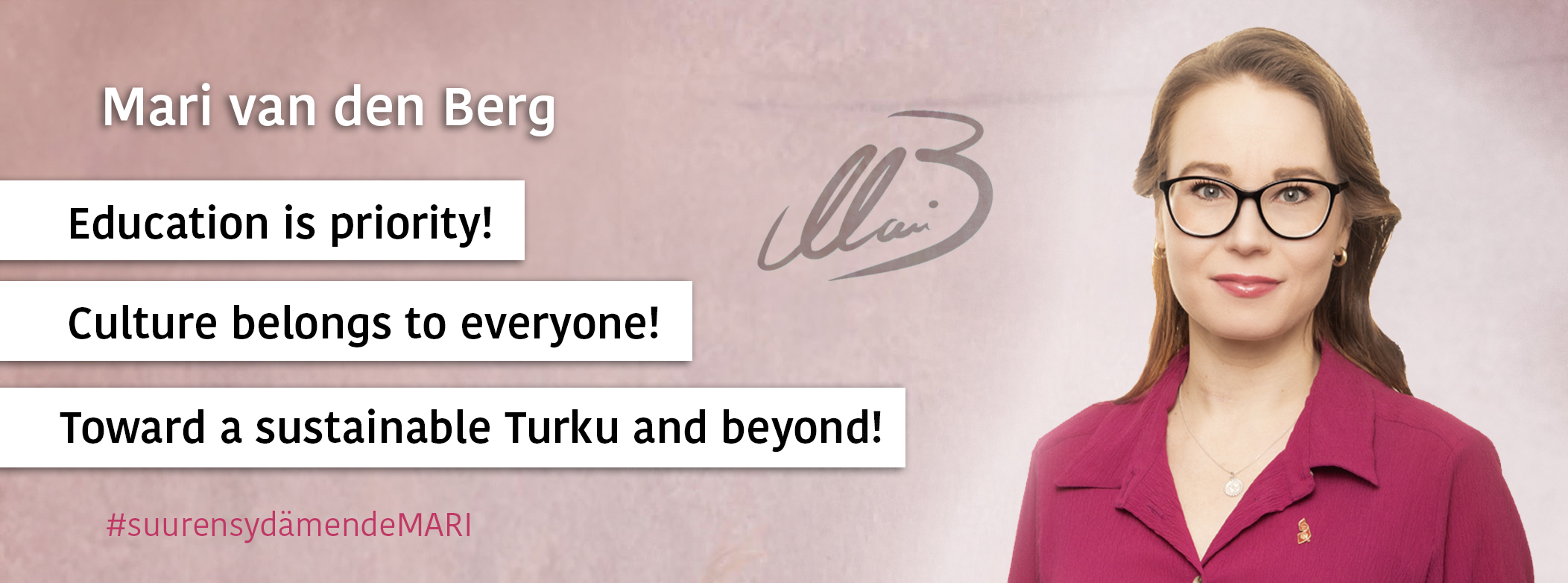
”EDUCATION IS THE PRIORITY”
Education—and, more broadly, knowledge—is the most important responsibility of municipalities. It is the city’s duty to ensure that every child and young person has the opportunity to develop and grow according to their potential. Students must be provided with the necessary support for learning, both pedagogically and through the presence of a sufficient number of skilled adults in the classroom. School staff must be paid fair wages, and there must be enough personnel to meet the needs of students. In general education, class sizes should not exceed 20 students per teacher. Similarly, group sizes in high schools and vocational education must not grow unreasonably large.
Attention must also be given to the availability and quality of education for adults, particularly vocational training. A well-rounded general education and a strong network of lifelong learning opportunities ensure that everyone, regardless of their background, has the chance to pursue their dreams. Daycares, schools, and other educational institutions must be welcoming and comfortable. Additionally, learning environments should be functional, accessible, and pleasant for teachers, staff, students, and their guardians.
Multidisciplinary cooperation in schools must be strengthened to ensure seamless collaboration between the city and regional welfare services in student support. If needed, students must be able to receive timely assistance near their school during the school day.
o
”CULTURE BELONGS TO EVERYONE”
Culture is the beating heart of the city of Turku. As a city with a long history, Turku has excelled in preserving numerous culturally and historically significant sites and making them accessible for everyone to see and experience. Additionally, Turku is a hub for performing arts, both in theater and music. Let’s not forget other creative fields and artisans, who are especially popular among tourists during the summer. Turku is also a center of student culture, with several major student events bringing thousands of students to the banks of the Aura River each year to enjoy time with friends and create unforgettable memories.
Overall, culture is a unifying force that brings people and communities together, with associations, small working groups, and entrepreneurial individuals playing a key role. The question is: how can the city of Turku ensure the continuation of a meaningful and vibrant cultural life in the future?
Turku still needs affordable spaces for cultural professionals. Financial support is necessary to sustain the operations of cultural organizations. Culture is not a ”luxury product”—it is what makes life worth living. Culture also brings a significant number of visitors to Turku and its surrounding areas each year, boosting and supporting the local economy.
Culture needs Turku, and Turku needs culture to continue being worthy of its title as a cultural city.
o
”TOWARD A SUSTAINABLE TURKU AND BEYOND!”
A sustainable city is built on research-based knowledge and long-term planning. In urban zoning, the perspectives of residents must be valued at least as much as those of investors. When designing new residential and recreational areas, the existing positive characteristics of these locations must be preserved. In Turku, green spaces should be protected whenever possible, and residents’ well-being should be enhanced through green infrastructure solutions. Turku should not be developed solely with efficiency in mind—sustainability must also be considered in the long term. The new buildings constructed today must remain functional and livable well into the 22nd century.
Urban transportation must continue to evolve through the harmonious coexistence of multiple modes of transport. Walking and cycling in Turku and its surrounding areas should be safe and as convenient as possible year-round. The bicycle lane network, in particular, must be well-designed and extensive. Additionally, there should be sufficient bike parking facilities near public transit stops.
Public transportation routes and schedules must be updated based on feedback from residents. The Föli service routes must be maintained, and their operating hours should extend into the evening to ensure that people living in more remote areas can access essential services without needing a personal vehicle.
.
Links to my election compass answers
Yle’s election compass (in English)
Turun Sanomat election compass (my answers also in English)
Election Compass for young people (in English)
Iltalehti Election Compass (my answers also in English)
.
Who am I?
.
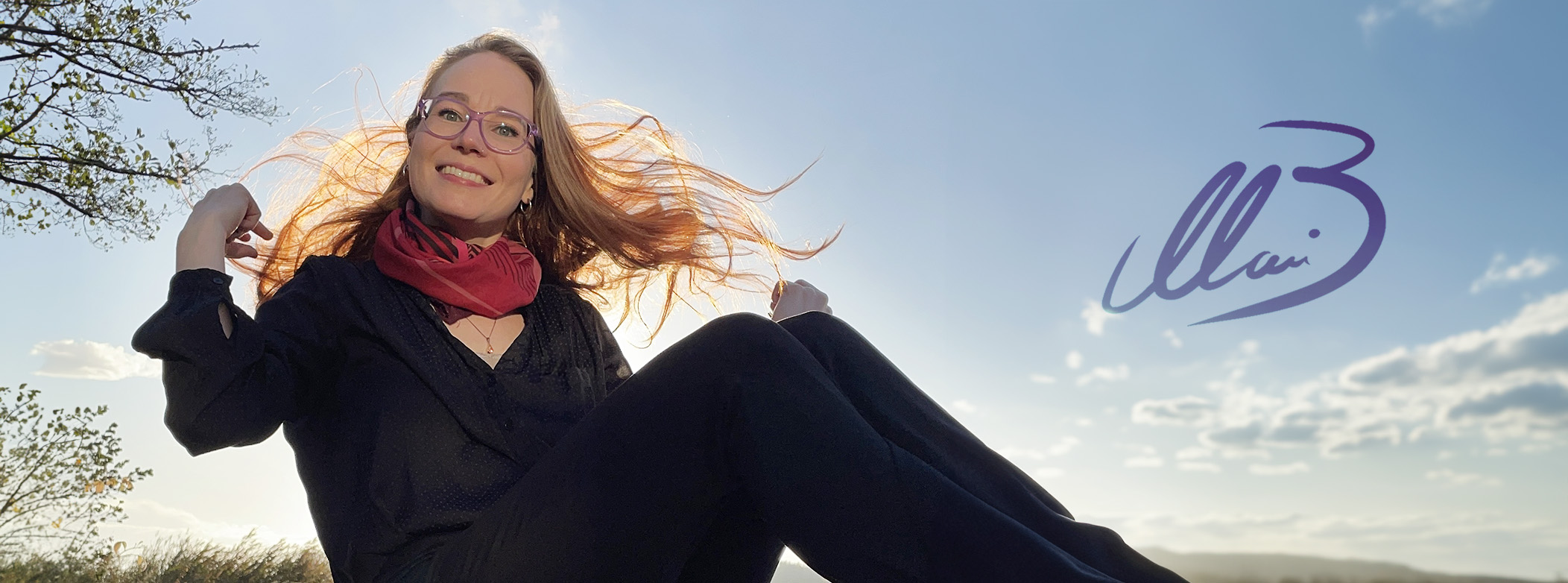
I’m Mari van den Berg, a social democrat from Turku with extensive experience in organizational work, education policy, and municipal politics. I moved to Turku from Harjavalta in 2007 to study, graduating from Puolalanmäki High School in 2008. Before that, I earned a degree in graphic design in Nakkila (SataEdu).
From 2010 to 2016, I lived abroad, working as an AuPair in the Middle East and volunteering in humanitarian aid. In 2013, I moved to the Netherlands, where I married my Dutch ex-husband. When I returned to Finland, I was accepted into the University of Turku’s teacher education program in 2017. Over the years, I’ve worked in education and youth work. In 2018, after going through a divorce, I became more involved in social activism through organizational work.
My political career began at the University of Turku’s student union and expanded into municipal politics in 2020. I ran in the 2021 municipal elections on the SDP list, and since then, I’ve been active in the party both locally and nationally. I’ve held roles such as secretary and membership officer of the Turku Social Democratic Ursin Association, chair of the Democratic Students, and vice-chair of the SDP Women’s Division in Southwest Finland. I’ve also participated in the SDP party congress and membership votes for parliamentary candidates.
Education and student politics are my key areas of expertise. I’ve been involved in the University of Turku Student Union, the Board of the Department of Education, and the University Collegium. I served as chair of the University of Turku Student Union’s finance committee and as the group leader of the SD-group.
I’ve also held municipal trust positions, such as serving as a substitute member of the Turku Education and Culture Board and as a member of its Finnish-language subcommittee in 2022. I’ve worked as a regional worker for the Social Democratic Youth and participated in several SDP working groups, including those focused on transportation, education, and higher education policy. Additionally, I’m involved in the Raisio-Naantali Junior Chamber of Commerce board, where I handle public relations.
I’ve served on the boards of several organizations, such as the Finnish UN Association, the European Forum in Turku, and the International Solidarity Foundation. Currently I am also a board member (COM) of JCI Raisio-Naantali. With my diverse background in organizational work and politics, I’ve become a significant influencer, especially in the fields of education and student policy.